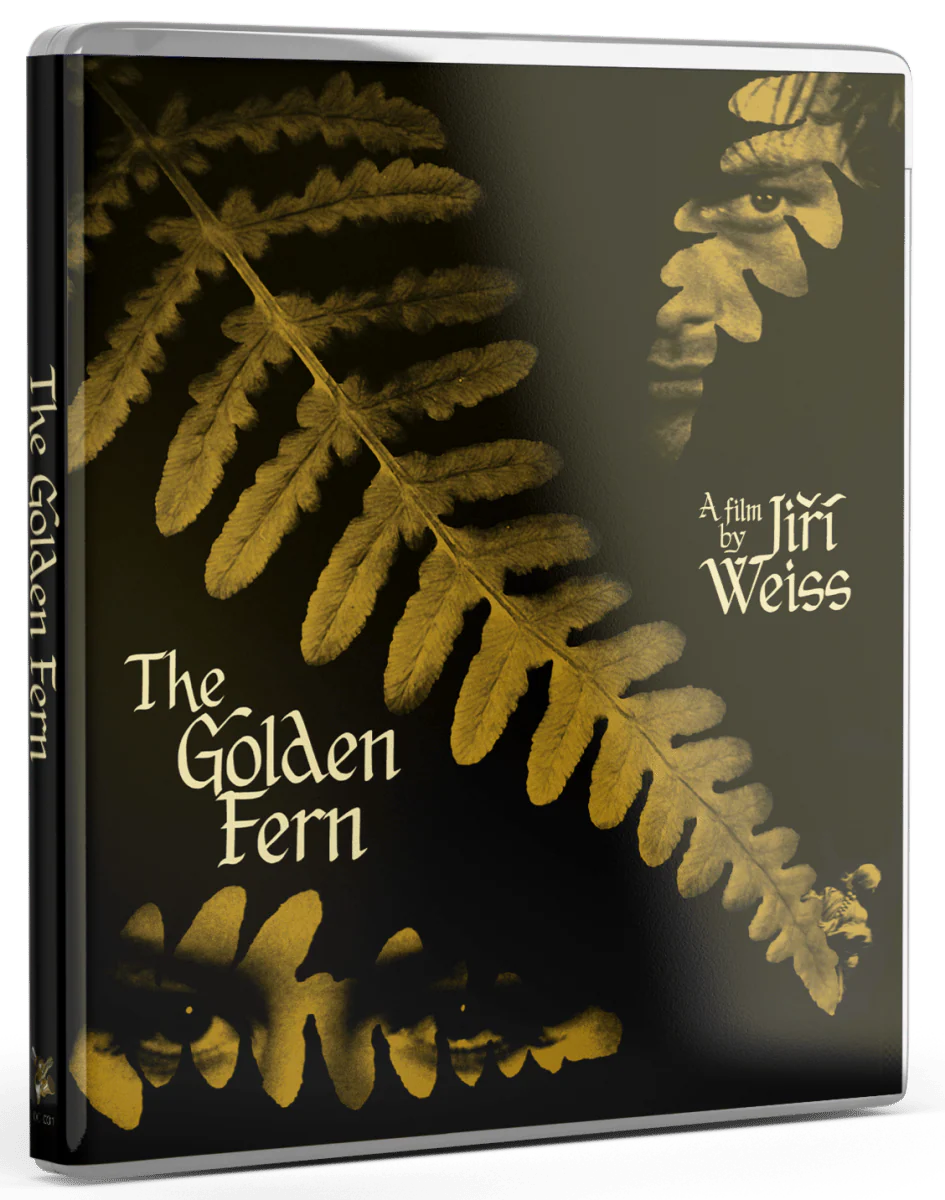
The Golden Fern (Standard Edition)
THE GOLDEN FERN (ZLATÉ KAPRADÍ) – 1963, NFA, 115 min. Czech director Jiří Weiss’s breathtaking B&W fairy tale is one of the most unjustly neglected treasures of 1960s fantasy filmmaking, a hauntingly lyrical work with overtones of Wojciech Has’s THE SARAGOSSA MANUSCRIPT, František Vláčil's MARKETA LAZAROVÁ and Cocteau’s BEAUTY AND THE BEAST. A handsome young shepherd (Jean Marais lookalike Vít Olmer) stumbles across a magical golden fern in the forest. A stunning, enigmatic forest fairy named Lesanka (Karla Chadimová) is sent to retrieve it but instead falls hopelessly in love with him. When he’s forced to join the army and heads off to war, she sews a seed from the fern into his shirt to protect him. While he’s away, though, he falls for the icily beautiful daughter of the commanding general (Dana Smutná) who demands he perform a series of Herculean tasks to prove his devotion to her. Director Jiří Weiss (1913 – 2004) was internationally acclaimed for dramas such as WOLF TRAP and ROMEO, JULIET & DARKNESS – here he worked with cinematographer Bedřich Baťka (who also photographed the legendary MARKETA LAZAROVÁ) to craft one of the most visually ravishing and hypnotic B&W wide screen fantasies of the era. Released by Deaf Crocodile, the Národní filmový archív and Comeback Company. In Czech with English subtitles.
Special Features
-
Three rare early Jiří Weiss shorts:
-
THE SUN SHINES ON THE RIVER LUŽNICE (NAD LUŽNICÍ SVÍTÍ SLUNCE) 1936, 10 min – beautiful, lyrical B&W tone poem of the pre-WWII Czech countryside: athletic young men and women canoeing down the River Lužnice, passing medieval castles and sleepy half-forgotten villages. Silent with music.
-
SONG OF RUTHENIA (PÍSEŇ O PODKARPATSKÉ RUSI) 1937, 11 min. – another gorgeous B&W film poem of the Czech countryside and Weiss’s personal favorite of his early shorts. Mythical images of mountains and streams and rural farmers tilling the land make this a precursor to the mystical visions of the forest in THE GOLDEN FERN. Filmed traveling on horseback through the mountains of Ruthenia (then part of Czecholovakia, now part of Ukraine), shooting the diverse community with Ruthenians (Slavs), Jews and Roma all living in the same area.
-
THE RAPE OF CZECHOSLOVAKIA (ULOUPENÍ ČESKOSLOVENSKA) 1939, 17 min. Weiss’s classic B&W agitprop short was made after he escaped to London just ahead of the Nazis. He carried with him three reels of material for his unrealized film DVACET LET SVOBODY (TWENTY YEARS OF FREEDOM) i.e. 20 years of the existence of independent Czechoslovakia from its 1918 founding to 1938 when the Munich Agreement dissolved it. In English with poetic narration written by C. Day-Lewis (father of Daniel Day-Lewis).
-
New video interview with the filmmaker’s son Jiří Weiss Jr. about his father’s remarkable life story and filmmaking career.
-
New commentary by film historian Peter Hames and Czech film expert Irena Kovarova of Comeback Company
-
Video essay by film historian Evan Chester.
Original: $21.99
-65%$21.99
$7.70The Golden Fern (Standard Edition)
THE GOLDEN FERN (ZLATÉ KAPRADÍ) – 1963, NFA, 115 min. Czech director Jiří Weiss’s breathtaking B&W fairy tale is one of the most unjustly neglected treasures of 1960s fantasy filmmaking, a hauntingly lyrical work with overtones of Wojciech Has’s THE SARAGOSSA MANUSCRIPT, František Vláčil's MARKETA LAZAROVÁ and Cocteau’s BEAUTY AND THE BEAST. A handsome young shepherd (Jean Marais lookalike Vít Olmer) stumbles across a magical golden fern in the forest. A stunning, enigmatic forest fairy named Lesanka (Karla Chadimová) is sent to retrieve it but instead falls hopelessly in love with him. When he’s forced to join the army and heads off to war, she sews a seed from the fern into his shirt to protect him. While he’s away, though, he falls for the icily beautiful daughter of the commanding general (Dana Smutná) who demands he perform a series of Herculean tasks to prove his devotion to her. Director Jiří Weiss (1913 – 2004) was internationally acclaimed for dramas such as WOLF TRAP and ROMEO, JULIET & DARKNESS – here he worked with cinematographer Bedřich Baťka (who also photographed the legendary MARKETA LAZAROVÁ) to craft one of the most visually ravishing and hypnotic B&W wide screen fantasies of the era. Released by Deaf Crocodile, the Národní filmový archív and Comeback Company. In Czech with English subtitles.
Special Features
-
Three rare early Jiří Weiss shorts:
-
THE SUN SHINES ON THE RIVER LUŽNICE (NAD LUŽNICÍ SVÍTÍ SLUNCE) 1936, 10 min – beautiful, lyrical B&W tone poem of the pre-WWII Czech countryside: athletic young men and women canoeing down the River Lužnice, passing medieval castles and sleepy half-forgotten villages. Silent with music.
-
SONG OF RUTHENIA (PÍSEŇ O PODKARPATSKÉ RUSI) 1937, 11 min. – another gorgeous B&W film poem of the Czech countryside and Weiss’s personal favorite of his early shorts. Mythical images of mountains and streams and rural farmers tilling the land make this a precursor to the mystical visions of the forest in THE GOLDEN FERN. Filmed traveling on horseback through the mountains of Ruthenia (then part of Czecholovakia, now part of Ukraine), shooting the diverse community with Ruthenians (Slavs), Jews and Roma all living in the same area.
-
THE RAPE OF CZECHOSLOVAKIA (ULOUPENÍ ČESKOSLOVENSKA) 1939, 17 min. Weiss’s classic B&W agitprop short was made after he escaped to London just ahead of the Nazis. He carried with him three reels of material for his unrealized film DVACET LET SVOBODY (TWENTY YEARS OF FREEDOM) i.e. 20 years of the existence of independent Czechoslovakia from its 1918 founding to 1938 when the Munich Agreement dissolved it. In English with poetic narration written by C. Day-Lewis (father of Daniel Day-Lewis).
-
New video interview with the filmmaker’s son Jiří Weiss Jr. about his father’s remarkable life story and filmmaking career.
-
New commentary by film historian Peter Hames and Czech film expert Irena Kovarova of Comeback Company
-
Video essay by film historian Evan Chester.
Product Information
Product Information
Shipping & Returns
Shipping & Returns
Description
THE GOLDEN FERN (ZLATÉ KAPRADÍ) – 1963, NFA, 115 min. Czech director Jiří Weiss’s breathtaking B&W fairy tale is one of the most unjustly neglected treasures of 1960s fantasy filmmaking, a hauntingly lyrical work with overtones of Wojciech Has’s THE SARAGOSSA MANUSCRIPT, František Vláčil's MARKETA LAZAROVÁ and Cocteau’s BEAUTY AND THE BEAST. A handsome young shepherd (Jean Marais lookalike Vít Olmer) stumbles across a magical golden fern in the forest. A stunning, enigmatic forest fairy named Lesanka (Karla Chadimová) is sent to retrieve it but instead falls hopelessly in love with him. When he’s forced to join the army and heads off to war, she sews a seed from the fern into his shirt to protect him. While he’s away, though, he falls for the icily beautiful daughter of the commanding general (Dana Smutná) who demands he perform a series of Herculean tasks to prove his devotion to her. Director Jiří Weiss (1913 – 2004) was internationally acclaimed for dramas such as WOLF TRAP and ROMEO, JULIET & DARKNESS – here he worked with cinematographer Bedřich Baťka (who also photographed the legendary MARKETA LAZAROVÁ) to craft one of the most visually ravishing and hypnotic B&W wide screen fantasies of the era. Released by Deaf Crocodile, the Národní filmový archív and Comeback Company. In Czech with English subtitles.
Special Features
-
Three rare early Jiří Weiss shorts:
-
THE SUN SHINES ON THE RIVER LUŽNICE (NAD LUŽNICÍ SVÍTÍ SLUNCE) 1936, 10 min – beautiful, lyrical B&W tone poem of the pre-WWII Czech countryside: athletic young men and women canoeing down the River Lužnice, passing medieval castles and sleepy half-forgotten villages. Silent with music.
-
SONG OF RUTHENIA (PÍSEŇ O PODKARPATSKÉ RUSI) 1937, 11 min. – another gorgeous B&W film poem of the Czech countryside and Weiss’s personal favorite of his early shorts. Mythical images of mountains and streams and rural farmers tilling the land make this a precursor to the mystical visions of the forest in THE GOLDEN FERN. Filmed traveling on horseback through the mountains of Ruthenia (then part of Czecholovakia, now part of Ukraine), shooting the diverse community with Ruthenians (Slavs), Jews and Roma all living in the same area.
-
THE RAPE OF CZECHOSLOVAKIA (ULOUPENÍ ČESKOSLOVENSKA) 1939, 17 min. Weiss’s classic B&W agitprop short was made after he escaped to London just ahead of the Nazis. He carried with him three reels of material for his unrealized film DVACET LET SVOBODY (TWENTY YEARS OF FREEDOM) i.e. 20 years of the existence of independent Czechoslovakia from its 1918 founding to 1938 when the Munich Agreement dissolved it. In English with poetic narration written by C. Day-Lewis (father of Daniel Day-Lewis).
-
New video interview with the filmmaker’s son Jiří Weiss Jr. about his father’s remarkable life story and filmmaking career.
-
New commentary by film historian Peter Hames and Czech film expert Irena Kovarova of Comeback Company
-
Video essay by film historian Evan Chester.